
Course Content
Module 1: Introduction to THEP and the Guide
This module provides a brief overview of THEP, and provides a full list of the abbreviations and acronyms mentioned throughout the training sections.
0/2
Module 2: Key THEP / THEC points in brief.
The sections below provide high-level information on THEP, the partners, and ways of working. The aim is to provide some context before you dive into the detail of each set of resources.
0/5
Module 3: THEP’s purpose, values, key resources, and an overview of partner organizations
0/3
Module 4: THEP’s origin
This module provides information on THEP’s origin, as well as key details on study findings from 1990-2000 and how this influences current ways of working.
0/2
Module 5: Applying our values & ways of working
This module includes further information on THEP’s ways of working and also provides examples of how THEP applies our values.
0/3
Module 6: Details on THEP’s work, including topic briefs
This module includes detail on THEP’s work. Topic briefs have been created to provide clear examples of how THEP works.
0/7
Module 7: Internal communications (for local THEP team)
This module includes details on communications and reporting.
Trail Area Health & Environment Program (THEP) Onboarding Guide 101

About THEP

Ultimately, THEP supports the community of Trail and surrounding areas to live, work and play in an area influenced by smelter air emissions for more than 125 years.

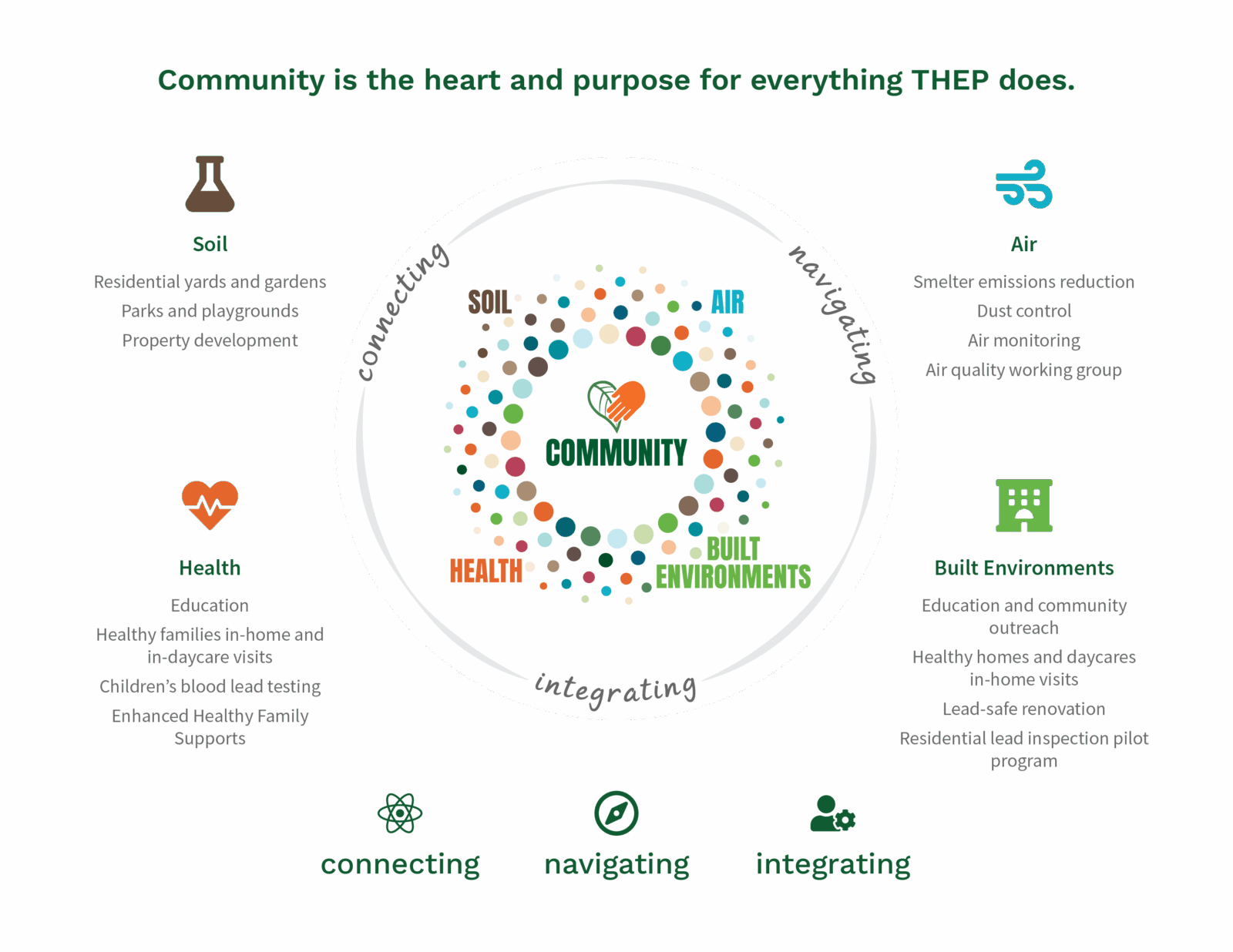
THEP focuses on air, soil, health, built environments (e.g. homes, daycares, fences, sheds, civic buildings, etc.), community connection and understanding the interrelationships between focus areas.

THEP aims to be an accessible entry point to learn about the issues, ask questions and find support. Community connections help ensure support reaches those who need it. A culture of sharing and learning helps to ensure programming and resources have maximum impact.

Scroll to Top