
THEP (formerly known as the Trail Lead Program, in place since 2001) helps the community to understand and navigate ways to reduce exposure to lead, other smelter metals, and sulphur dioxide. Program activities are focused on air, soil, built environments (e.g. homes, daycares, fences, etc.), health, community connection and integration.
FAQs
About THEP
THEP’s purpose is to support the community of Trail and surrounding areas to live, work and play in an area influenced by smelter air emissions.
The Program partners are the City of Trail, Teck Trail Operations, Interior Health, and the B.C. Ministry of Environment and Parks. Together they work toward shared objectives and goals with respect to improvements in knowledge, awareness, and health related to lead and sulphur dioxide.
THEP is implemented by partners. Each partner focuses on their area of expertise while also collaborating in support of community health and wellbeing. The partners are guided by the strategic plan which they jointly develop and agree upon every five years.
Each year, THEP supports hundreds of families in the Trail region with programs and supports to reduce people’s exposure to lead.
The Trail Health & Environment Committee was formally established as a select committee of the City of Trail. THEC’s mandate is to be a transparent platform for multi-stakeholder dialogue, collective decision-making and community engagement with respect to THEP. The Terms of Reference are approved by Trail city council and are intended to be reviewed on the same five-year schedule as updates to the strategic plan. THEC was established in 2001 by the Trail Lead Task Force which conducted research on the issues for 10 years prior.
Role as per Terms of Reference updated and approved June 2022:
• Participate in decision-making and approve the strategic direction of THEP.
• Monitor and advise Trail city council on the implementation of THEP.
• Support collaboration between Program partners in an effort for the whole to be greater than the sum of the parts.
• Help interpret and understand the complexities of the comprehensive Program, including contextualizing information to the local area.
• Establish and convene working groups from time to time to investigate and make recommendations on specific issues (for example Air Quality Working Group, Community Renewal Working Group).
• Facilitate public communication and oversight with respect to delivery of services and progress toward the joint goals and objectives of THEP.
• Provide a voice for the community of Trail in related processes sometimes taking place concurrently, and relevant to attaining the stated goals and objectives.
• Be a mechanism for Program accountability to the community, the City, as well as between the partners.
Membership on the Committee aims to include those with a potential interest in the activities of THEP, and shall consist of:
- The City of Trail Mayor, or a designate from city council, who shall act as Chair
- 1 member of Trail City Council, who shall act as alternate Chair
- 1 member appointed by the following local governments, or their designate
- Village of Warfield
- RDKB Electoral Area A
- RDKB Electoral Area B
- 2 members from Teck Trail Operations
- 2 members from Ministry of Environment and Parks
- Member specific to authorizations south
- Member specific to land remediation section
- 2 members from Interior Health
- Medical Health Officer
- Organizational representative
- 1 member from United Steelworkers, Local 480 or 9705
- Up to 6 members appointed from the public at large, or representative organizations, who are broadly reflective of the community.
All local governments in the Lower Columbia are invited to meetings of the Trail Area Health & Environment Committee. An updated list of members is available here.
The Mayor of Trail, or a designate, chairs the Trail Area Health & Environment Committee. There is also representation on the committee from the Village of Warfield and RDKB Areas A and B. All local governments in the Lower Columbia are invited to meetings of the Trail Area Health & Environment Committee.
Community leadership and participation on THEC is fundamental to its success. Community engagement has ensured a potentially stigmatizing issue is a community success story. This is exemplified by exceptionally high participation rates in children’s lead testing clinics and other programs, owing in large part to the high degree of trust and goodwill generated by the Program. Community leaders keep up the conversation, provide local context, and root strategic directions in on-the-ground realities. The community voice helps to hold all partners accountable to the residents and each other.
Without the community at the table, THEC would revert to being a regulatory discussion between industry and government, excluding the people that the programs are intended to benefit. Meaningful involvement of people in decisions affecting their life/health is itself a determinant of health. Effective citizen participation requires a facilitative effort because of the complexity of the issues; however community members will voice their perspectives if they are empowered and listened to.
Community involvement is a long-standing commitment of THEC. The easiest way to learn more is to attend a THEC meeting. There are five meetings a year and they are open to the public. You can attend online or in person. Everyone is welcome. If you want to engage further, there are six spots on the committee available for community members and THEC is often seeking community representation. If joining the committee interests you, please send details about yourself and why you would like to be involved to programs@thep.ca.
All studies are available under Resources and Reports.
THEP’s combined efforts are a driver for a healthy community, healthy children and healthy air, working together across all levels of government, industry and community. THEP has greatly reduced exposure to lead in the community over time. No single organization or agency could do this alone. These combined efforts for longer than 30 years are leading to improved air quality and health outcomes for children. Trail is seeing the lowest children’s blood lead levels ever recorded. Since 2020, lead in community air consistently meets the world’s strictest standards (US EPA).
Communities that live in close proximity to active lead smelting and mining facilities share unique challenges when working toward the goal of thriving families, environment and economy. There is often a diverse network of local and regional stakeholders working to ensure economic prosperity along with the health of the environment and people. Acknowledging that no single group or organization can address the complex situation on their own, they may come together to collaboratively reduce exposure to smelter and mining specific emissions such as lead (Pb) and sulphur dioxide (SO²), in addition to providing community-based education and programs to reduce children’s blood lead levels, and ultimately improve peoples’ health. Two such communities include Port Pirie, Australia, and Trail. It’s under the shared purpose to support their communities to live, work and play in an area influenced by smelter and mining air emissions that several international locations have been sharing their work in hopes of learning from one another’s experience. For more than thirty years, these two communities have been exchanging knowledge and ideas with the ultimate goal of reducing children’s blood lead levels in their communities.
Health
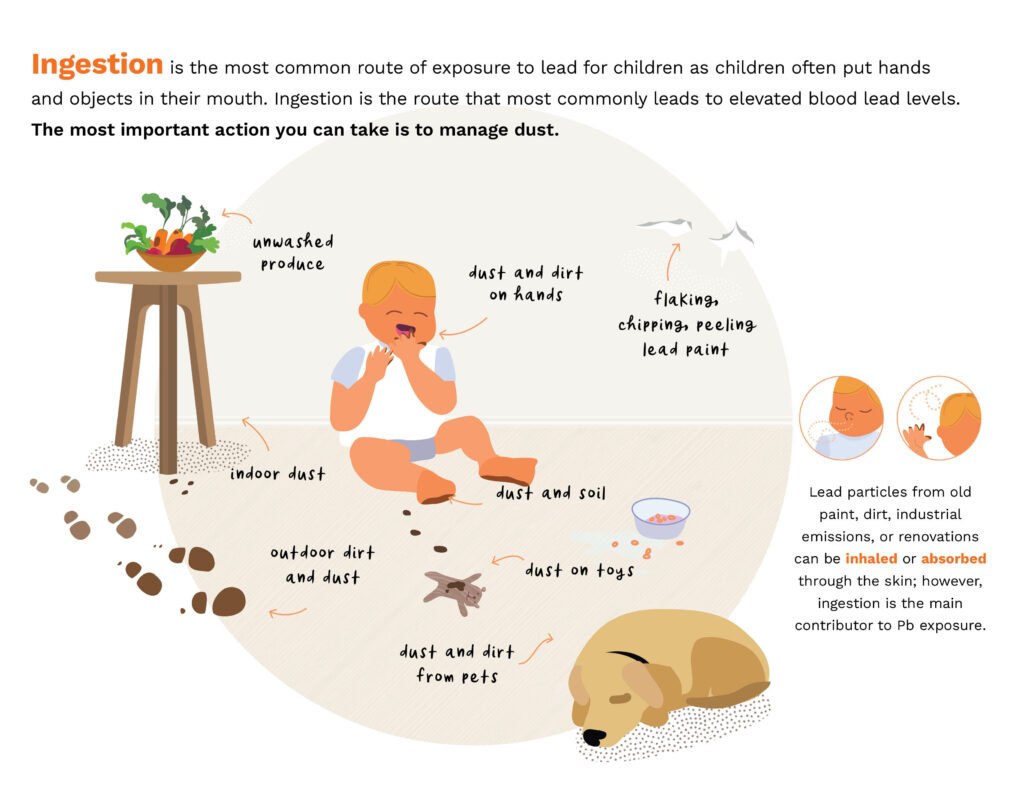
According to the US Centre for Disease Control, ingestion is the main route of exposure to lead (Pb) for children, and the route that most commonly leads to elevated blood lead levels.
This is true for any community and is not specific to communities with a lead smelter.
Children are at greater risk of ingesting lead as they often put hands and objects in their mouth.
Inhalation can be an exposure pathway for workers in lead industries, “do-it-yourself” home renovators, persons with hobbies (stained glass making/soldering), people who smoke and children exposed to second hand smoke. Absorption into the skin is a less common and rare exposure pathway.
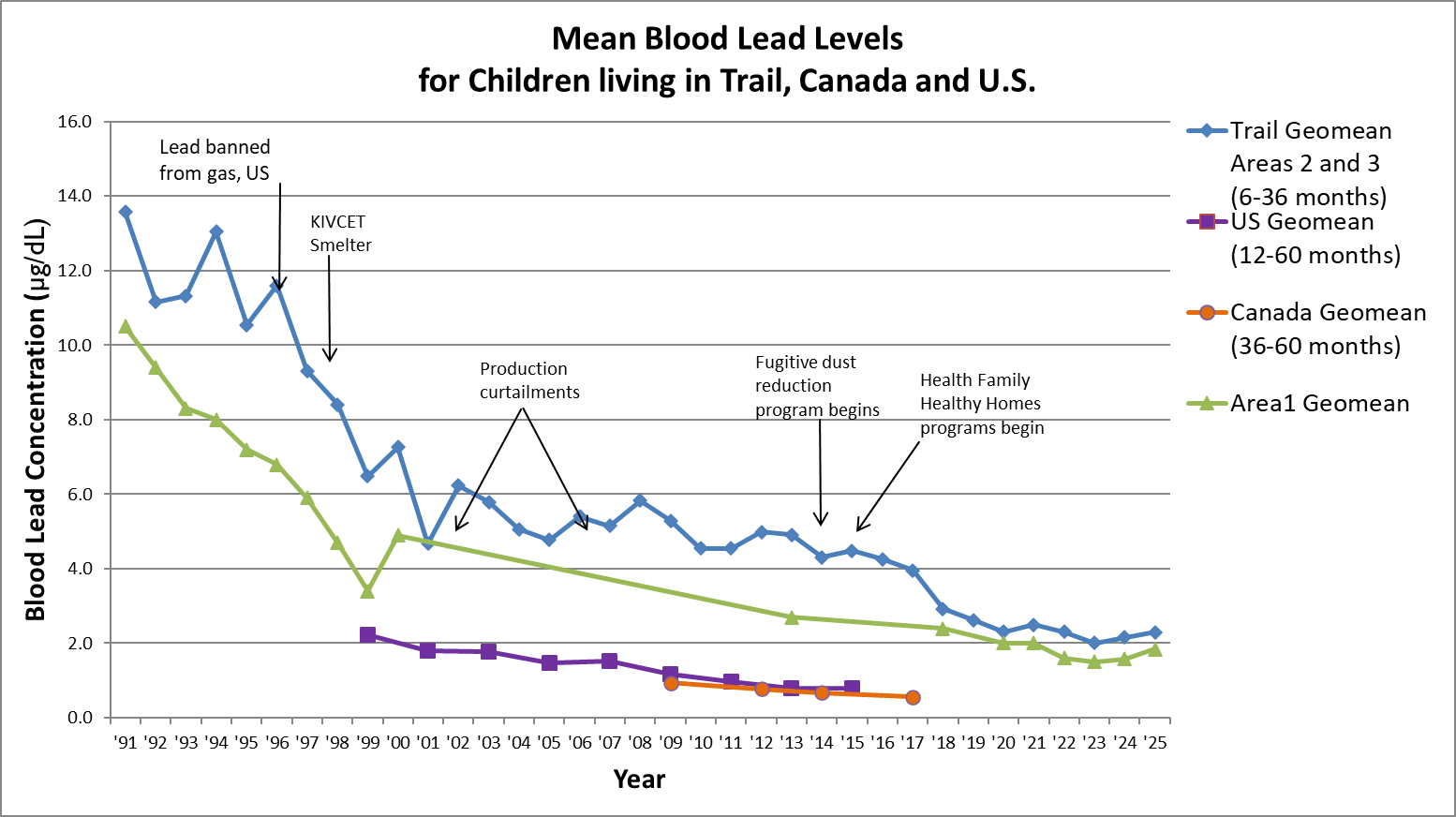
Our program has been working with Trail area families since 1989. Blood lead levels in Trail pre-school children have dropped significantly, from an average of 13.5 in 1989 to 2.3 micrograms per decilitre (µg/dL) in 2025. Year to year variability in blood lead levels is influenced by lead levels in community air, weather conditions, the group of children tested and where they live. The long-term downward trend continues to highlight the community’s progress in managing lead exposure in an area with an operating lead smelter.
The effects of lead exposure depend on a child’s age at the time of exposure, the dose and duration, and other health or environmental factors.
Children may not show signs of lead toxicity until years later—often when academic or behavioral demands increase in school. Even low levels of lead can harm brain development and cognitive function, but symptoms may be subtle and hard to attribute to lead alone.
Acute exposure (a large dose over a short time) can cause immediate symptoms like irritability, headaches, fatigue, stomach pain, or seizures—typically classified as lead poisoning. Chronic low-level exposure, however, may not cause obvious signs but can lead to learning difficulties, attention problems, or delays in language and motor skills. These effects may only become apparent with age or through developmental testing and/or IQ testing.
Historically, products like leaded paint and gasoline caused widespread exposure, but blood lead levels declined significantly after regulations took effect in the 1990s. However, in countries with weaker standards, lead exposure remains a concern.
Primary prevention is the most effective way to prevent lead exposure. Actions you can take to reduce the risk of lead exposure include:
- Wash your hands and your children’s hands especially before eating and after playing outdoors.
- Eat foods that have enough iron and other vitamins and minerals. A person who eats a balanced, nutritious diet may absorb less lead. Eat at the table.
- Keep your floors dust-free by vacuuming and damp-mopping often. Leave outside shoes at the door. Damp dust frequently, especially window ledges and countertops.
- Keep outdoor play areas clean. Cover the sandbox when you are finished playing. Hose off patios, play equipment, and driveways often. Play on the grass and cover bare soil areas.
- Renovate safely. Seal off the area of work, use appropriate personal protective equipment (PPE), and clean well when complete. Keep children and pregnant women away if possible.
Secondary prevention including blood lead testing and follow-up minimizes further exposure. Trail offers an annual voluntary blood lead testing clinic for children under five years old.
To avoid stirring up dust, use a damp mop on bare floors and use a damp cloth to wipe window sills, furniture, benches, toys, baseboards and other surfaces that children touch. Dry sweeping is not recommended as it lifts dust into the air only to have some of it settle back down again.
Areas where food is prepared or eaten and floors or surfaces where babies or toddlers spend lots of time should always be kept clean.
For carpeted floors, use a vacuum cleaner with a HEPA filter or ducted vacuum system. These vacuums filter fine dust particles and prevent dust from recirculating in the room.
Always wash your hands and children’s hands, especially before eating and after playing outdoors. Leave outside shoes at the door. Renovate safely, sealing off the area of work. Eat regular meals high in calcium, Vitamin C and iron.
Sign up online for a Healthy Families Healthy Homes visit to learn more. All supports provided are free, high quality, and focused on reducing potential exposure to dust and lead in your home.
During a ground-cover evaluation, the Community Program representative checks the amount of bare soil in a yard. Bare soil is a source of dust and may contain lead.
The most effective way to reduce children’s potential ingestion of lead is to keep indoor dust down. Connect (or reconnect) with the public health nurse and community program office for a home visit to look more closely at nutrition, diet and the home and yard environment. They will connect with you community resources and groups that support early childhood development. They can also provide useful supplies to keep dust down in the home environment, such as a vacuum (or replacement bags), dust buster kits, hand soap, and lead-safe renovation supplies.
Families with children under 12 months are offered a free Healthy Families home visit. A public health nurse will meet with parents to answer their questions and show simple ways to promote children’s health and wellbeing, and reduce lead exposure. Young children in Trail, Casino, Oasis, Rivervale, Waneta and Warfield are invited to have their blood lead levels tested each year starting from the age of 6 months to 36 months.
All programs are voluntary.
The Healthy Families Healthy Homes Program is an in-home visitation, health promotion program targeting expectant families and families with children under 3 years old in Trail, Casino, Oasis, Rivervale, Waneta and Warfield. This is a time when children are more at risk of exposure to lead in their home environment as they are beginning to crawl, explore their world and put hands and objects in their mouths.
Each family receives two visits, one from an Interior Health Public Health registered nurse (the Healthy Families visit) and one from a trained Community Program Office professional (the Healthy Homes visit). Visits focus on prevention of lead exposure and strengthening children’s healthy development through education, awareness and supplies to help parents take action immediately.
Every year, THEP offers free voluntary testing of blood lead levels for children from the age of 6 to 36 months living in Trail, Casino, Oasis, Rivervale, Waneta and Warfield. Children up to 5 years old from other Lower Columbia communities are welcome to attend. Clinics are typically held in September with a follow-up clinic in February.
Please contact the Interior Health Public Health nurse for details. Call 250-364-6223 or text 250-231-5945.
Lead exposure can have detrimental effects on early childhood development and children’s future outcomes. Lead is most harmful to young children under the age of six. A pregnant woman who is exposed to lead can pass it to her baby through the mother’s breast milk. For children, there is no known safe level of lead exposure and no known safe blood lead concentration.
Most lead enters the body through the mouth via eating, drinking or breathing in dust containing lead. Young children are at a higher risk for lead exposure and its effects because:
- They often put their hands and objects in their mouths.
- They sometimes swallow non-food items.
- Their bodies absorb lead at a higher rate.
- Their brains are developing quickly.
Still, there are actions you can take to help reduce your family’s exposure to lead.
Lead Safe Renovation
THEP works with the community to provide information and education about lead in paint to reduce children’s potential exposure to lead. The program does not include removing lead in paint from homes. The program does provide lead-safe renovation supplies for DIY renovations in the Trail area. We’ve put together videos you can use to learn more about safely removing paint containing lead from your home. Visit thep.ca for videos.
Please contact the McKelvey Creek Landfill (250) 364-9834 to inquire about disposing of paint containing lead.
If you must remove paint containing lead from your walls, this Government of Canada resource provides suggestions to be lead-safe. THEP also has DIY videos to reduce dust during renovations and they are accessed at thep.ca > Resources > Videos.
Learning about possible sources of lead and how you and your child might be exposed can help you take action to reduce any risk.
Primary prevention is the most effective way to prevent lead exposure. Actions you can take to reduce the risk of lead exposure include:
- Wash your hands and your children’s hands especially before eating and after playing outdoors.
- Eat foods that have enough iron and other vitamins and minerals. A person who eats a balanced, nutritious diet may absorb less lead. Eat at the table.
- Keep your floors dust-free by vacuuming and damp mopping often. Leave outside shoes at the door. Damp dust frequently, especially window ledges and countertops.
- Keep outdoor play areas clean. Cover the sandbox when you are finished playing. Hose off patios, play equipment, and driveways often. Play on the grass and cover bare soil areas.
- Renovate safely. Seal off the area of work, and clean well when complete. Keep children and pregnant women away if possible.
Secondary prevention including blood lead testing and follow-up minimizes further exposure. Trail offers an annual voluntary blood lead testing clinic for children under five years old.
- Generally pregnant women and newborns are at low risk of adverse health effects from lead (Pb) exposure in typical every-day community situations. We strongly advise pregnant women and children avoid being exposed to dust from home renovation as this could result in higher than typical lead (Pb) exposure. This includes exposure to fine particles of lead paint in homes (this applies to any community). Please see our Lead-safe Renovation rack card for details.
- A mother’s blood lead level affects the blood lead level of the fetus during pregnancy and is only a concern in situations where the mother has experienced higher than usual exposure, such as work exposure, home renovations, or living in parts of the world where lead exposure may be high. If a woman is pregnant, or planning to become pregnant, in a higher exposure risk situation, she should be tested by her physician or, if the timing is convenient, at one of THEP’s blood lead testing clinics. Please contact THEP’s Public Health Nurse at 250-364-6223.
- If you work in an industry that has potential lead exposure, talk to your employer about blood lead monitoring and the potential for alternative work.
- A pregnant woman who is exposed to lead can pass it to her baby. Lead can also be passed to a baby through the mother’s breast milk.
A roofing contractor showed us how he leans plywood against the side of a house or fence with a tarp underneath on the ground. This acts as sheeting when the old shingles are pulled off and it protects the house, keeps the dust contained, and can be easily vacuumed or hosed off at the end of the project and re-used.
Check out the Contractor section on this website. For more information, or to become a Trail Area Lead Safe Contractor, please contact the Community Program Office at 1319 Bay Avenue or 250.368.3256.
Please contact the Community Program Office at 1319 Bay Avenue or 250.368.3256 for information on the Lead Safe Renovation Program supports and information available to you.
The Lead Safe Renovation Program applies to all pre-1990 homes anywhere in the Lower Columbia.
Resources are also available online.
Primary prevention is the most effective way to prevent lead exposure. Actions you can take to reduce the risk of lead exposure include:
- Wash your hands and your children’s hands especially before eating and after playing outdoors.
- Eat foods that have enough iron and other vitamins and minerals. A person who eats a balanced, nutritious diet may absorb less lead. Eat at the table.
- Keep your floors dust-free by vacuuming and damp-mopping often. Leave outside shoes at the door. Damp dust frequently, especially window ledges and countertops.
- Keep outdoor play areas clean. Cover the sandbox when you are finished playing. Hose off patios, play equipment, and driveways often. Play on the grass and cover bare soil areas.
- Renovate safely. Seal off the area of work, use appropriate personal protective equipment (PPE), and clean well when complete. Keep children and pregnant women away if possible.
Secondary prevention including blood lead testing and follow-up minimizes further exposure. Trail offers an annual voluntary blood lead testing clinic for children under five years old.
If your property is in THEP’s Soil Management Area, your contractor needs to know there may be metal contamination in the soil.
All soil in THEP’s Soil Management Area should be tested prior to transport and disposal offsite.
Soil testing and disposal approvals can take weeks, so plan early and get your soil tested now (it’s free). Homeowners can sign up online for soil testing.
The most effective way to reduce children’s potential ingestion of lead is to keep indoor dust down. Connect (or reconnect) with the public health nurse and community program office for a home visit to look more closely at nutrition, diet and the home and yard environment. They will connect with you community resources and groups that support early childhood development. They can also provide useful supplies to keep dust down in the home environment, such as a vacuum (or replacement bags), dust buster kits, hand soap, and lead-safe renovation supplies.
Families with children under 12 months are offered a free Healthy Families home visit. A public health nurse will meet with parents to answer their questions and show simple ways to promote children’s health and wellbeing, and reduce lead exposure. Young children in Trail, Casino, Oasis, Rivervale, Waneta and Warfield are invited to have their blood lead levels tested each year starting from the age of 6 months to 36 months.
All programs are voluntary.
Soil Management Program
Soil management plans for each project are unique and depend on project details and soil test results. Metal contaminated soils may be risk-managed through a combination of:
- Removal and offsite disposal; and
- Capping beneath clean soil or hard surfaces such as building foundations, driveways, walkways, and patios.
Learning about possible sources of lead and how you and your child might be exposed can help you take action to reduce any risk.
Primary prevention is the most effective way to prevent lead exposure. Actions you can take to reduce the risk of lead exposure include:
- Wash your hands and your children’s hands especially before eating and after playing outdoors.
- Eat foods that have enough iron and other vitamins and minerals. A person who eats a balanced, nutritious diet may absorb less lead. Eat at the table.
- Keep your floors dust-free by vacuuming and damp mopping often. Leave outside shoes at the door. Damp dust frequently, especially window ledges and countertops.
- Keep outdoor play areas clean. Cover the sandbox when you are finished playing. Hose off patios, play equipment, and driveways often. Play on the grass and cover bare soil areas.
- Renovate safely. Seal off the area of work, and clean well when complete. Keep children and pregnant women away if possible.
Secondary prevention including blood lead testing and follow-up minimizes further exposure. Trail offers an annual voluntary blood lead testing clinic for children under five years old.
THEP soil management begins with soil testing and, depending on metal levels, may include covering bare soil, improving lawn condition, and at times replacing contaminated soil with clean fill. The entire process from soil testing to soil management is described in this infographic.
The Soil Management Program includes soil testing and, in qualifying yards, management (improvements to ground cover or replacement of soil) on a prioritized basis.
Given the large number of households in THEP’s Soil Management Area, assessments are prioritized based on the presence of children under 12 within areas that are known to have the highest levels of lead in the soil, such as those neighbourhoods closest to the smelter.
This program has been in place since 2007 and was expanded in 2019. The program is implemented by the Trail Area Health & Environment Program (THEP) through funding from Teck. Teck is the responsible party for annual soil management plans under the direction of the B.C. Ministry of Environment and Parks as per the Contaminated Sites Regulation of the Environmental Management Act.
A soil management plan is necessary because metallurgical facilities have been operating in Trail for well over a century. Historical aerial emissions from these facilities have resulted in the addition of metals, including lead, into the soil in the surrounding area. As a result, soil in the Environmental Management Area around Trail is likely to have metals above natural background levels and regulatory standards.
Teck is the responsible party for the Soil Management Plan under the direction of the B.C. Ministry of Environment and Parks as per the Contaminated Sites Regulation of the Environmental Management Act.
Teck is working with the B.C. Ministry of Environment and Parks to develop and seek approval for a long-term soil management plan called a Wide Area Remediation Plan. Once that plan is drafted, a full public consultation will take place prior to approval and implementation. Annual soil management plans are an interim step focused on highest risk properties.
The Wide Area Remediation Plan will continue to build on the work to address historical soil impacts in Trail and the surrounding area.
In recent years, major improvements have been made to lower metal emissions from Teck Trail Operations, resulting in improved air quality. This means that Teck is not adding as many metals, such as lead, into the soil and can now focus more on addressing the historical impacts to soil from past emissions.
Measures to manage exposure to lead and other metals in the soil may include improvements to ground cover, such as planting grass, or the replacement of soil in qualifying yards and gardens.
Soil testing is the first step. Everyone in the Environmental Management Area can sign up for free soil testing online.
For most people, the risks associated with metals in soil are low, particularly where soils are covered by grass or other materials. However, bare soils may increase exposure to metals and contribute to elevated blood lead levels in children.
Annual Soil Management Plans are interim plans, conducted under the direction of the B.C. Ministry of Environment and Parks as per the Contaminated Sites Regulation of the Environmental Management Act.
Teck is working with the B.C. Ministry of Environment and Parks to develop and seek approval for a long-term soil management plan, called a Wide Area Remediation Plan. Once that plan is drafted, a full public consultation will take place prior to approval and implementation.
The Wide Area Remediation Plan will continue to build on the work we have been doing to address historical soil impacts in Trail and the surrounding area.
Soil assessment and testing is when soil samples from yards are collected and analyzed for metals. Results from THEP soil testing indicate the amount of lead and other metals in the soil in parts per million (ppm) or milligrams per kilogram (mg/kg), which are equivalent measurements.
Properties in Trail, Casino, Oasis, Rivervale, Warfield, Waneta, Montrose, south Castlegar, areas of RDKB Area A and B, areas of RDCK Area J and the edges of Rossland are in THEP’s Soil Management Area. View the map.
Properties within the THEP Soil Management Area may contain elevated soil metals concentrations due to historical aerial emissions from the Trail smelter. Free soil testing is available to help you understand your metals levels, which is helpful information if you plan on disturbing soil, growing vegetables, or have young children frequent the property.
Everyone in THEP’s Soil Management Area is eligible for soil testing. See the map. Sign up online.
Get your soil tested as early as possible. Sign up online (it’s free). The soil testing season begins when the ground thaws in the spring and ends when the ground is covered or frozen in the fall. Testing when the ground is frozen would only take place under special circumstances.
Soil testing is free. Next steps are dependent on each specific situation. For most cases, there are no costs to the homeowner. For disposal of soil, THEP ensures incremental costs are not borne by homeowners.
During a ground-cover evaluation, the Community Program representative checks the amount of bare soil in a yard. Bare soil is a source of dust and may contain lead.
All soil assessment and improvement work is coordinated by the Trail Area Health & Environment Program (THEP) and paid for by Teck. There is no cost to the landowner for soil testing and management of smelter-sourced contamination.
Teck is the responsible party for the Soil Management Program under the direction of the B.C. Ministry of Environment and Parks as per the Contaminated Sites Regulation of the Environmental Management Act.
Teck Metals has invested approximately $5 million annually toward the Soil Management Program as part of its continued commitment to support the community of Trail and surrounding areas to live, work and play in an area influenced by smelter air emissions. It is expected that these programs will continue for many years to come.
Soil testing is available to anyone in THEP’s Soil Management Area.
Three criteria are used to determine priorities for soil management: the presence of children under 12 years of age; the quality of ground cover; and lead levels in soil. The prioritization criteria is based on the U.S. Housing and Urban Development approach to identifying childhood exposure to lead in soil, with modifications to account for site-specific aspects of the community of Trail.
Children have higher potential risk for exposure to lead in soil than adults because adults ingest less soil. If ingested, children absorb lead more easily and are more vulnerable to the effects of lead (e.g., brain development) than adults. The prioritization approach reflects these tolerance levels.
Ground cover quality determines the availability of soil for ingestion.
In the annual soil management plans, priority will be given to properties where children under 12 live or visit regularly. This would include where children are present two or more days each week for periods of three hours or more, or a total of 60 hours or more each year.
Teck is working with the B.C. Ministry of Environment and Parks to develop and seek approval for a long-term soil management plan called a Wide Area Remediation Plan, which will over time address all properties within THEP’s Soil Management Area. Some properties will require no action.
Sign up online to have your soil tested. Vegetable gardens remain a priority for soil testing and management.
If you are planning to excavate and move soil out of your yard, please contact THEP in advance to get your soil tested. All soil in the Environmental Management Area should be tested for arsenic, cadmium, lead and zinc prior to transport and disposal off-site.
THEP will test your soil for free. You can sign up online. Soil testing is the first step to understanding if you require soil management support.
Soil within THEP’s Soil Management Area may exceed the acceptance criteria at the landfill due to historical aerial emissions from the Trail smelter. Metal contaminants that may exist include arsenic, cadmium, lead and zinc. Soil exceeding standards will require soil disposal support.
Soil testing and disposal approvals can take weeks, so plan early and get your soil tested now (it’s free). You can sign up online.
If your property is in THEP’s Soil Management Area, your contractor needs to know there may be metal contamination in the soil.
All soil in THEP’s Soil Management Area should be tested prior to transport and disposal offsite.
Soil testing and disposal approvals can take weeks, so plan early and get your soil tested now (it’s free). Homeowners can sign up online for soil testing.
THEP has completed soil testing at daycares in Trail and area and has provided soil management where recommended.
If you know of a new daycare facility opening in THEP’s Soil Management Area, please contact THEP to arrange soil testing.
Yes, it is safe to play at parks and playgrounds in Trail and in THEP’s Soil Management Area.
Parks and playgrounds in Trail, Rivervale and select parks in Warfield have been assessed and soil management has been completed where needed. Park spaces in the City of Trail are maintained to a high standard and generally have excellent ground cover. If you notice poor ground cover at parks or playgrounds, please contact the City of Trail and/or the Community Program Office. Still, always wash children’s hands (and yours) after outdoor play and before eating.
Unpaved alleys in Trail were identified as a potential source of lead by the Trail Lead Task Force. They recommended annual dust suppressant application to reduce dusting, which has been applied annually by the City of Trail since 1993. The City also completes annual monitoring and maintenance of unpaved alleys including grading and gravel placement.
A recent study was conducted in seven unpaved alleys in Trail to compare current soil and dust levels with historical data. Results showed that lead levels in alleys are lower than historical levels and below the levels where soil management is prioritized.
Residents with concerns regarding dusty conditions in unpaved alleys can report their concerns to the City’s grounds and roads superintendent.
Yes, your pets are safe from lead in soil. The main route of lead exposure for pets, like children, is through ingestion. Based on published research that outlines how much lead a pet would need to ingest to negatively impact health, it is unlikely that pets could consume enough soil from the Trail area to cause illness. Still, pets can bring lead in dust into your home. To reduce indoor dust from pets you can brush them outdoors, use entry mats, bathe them often, and wipe paws when dirty.
While lead in soil is unlikely to harm pets, other sources of lead in your home and yard environment could expose pets to lead. For example, chipping and peeling paint containing lead or consumption of other non-food items such as lead shot.
A Wide Area Remediation Plan (WARP) is defined in the B.C. Contaminated Sites Regulation as “a remediation plan for an environmental management area for one or more specific substances which have originated from one or more sources specified in the plan”.
Teck is working with the B.C. Ministry of Environment and Parks on a WARP to address soil impacts from historical aerial smelter emissions.
An approved WARP for the Trail area will formally establish criteria and targets for soil management and monitoring of human and ecological health.
THEP’s Soil Management Program addresses individual properties in priority order and in recent years has been able to offer soil management to all priority properties identified. THEP now has capacity to trial soil management at the city block scale. Research shows that neighbourhood-wide soil management is an effective way to reduce community exposure to lead and the potential impact on children.
All blocks were considered for the block initiative and were prioritized based on child occupancy and lead levels in the soil.
If you have not had your soil assessed, consider getting it tested this year so the information is included for potential future block initiatives.
Soil management of entire city blocks is a initiative in 2023. The process and outcomes will be monitored to determine if this should be repeated in future years.
All blocks were considered for the block initiative and were prioritized based on child occupancy and lead levels in the soil. If your block has a relatively high number of children and elevated soil lead levels, it may be a candidate for a future block program.
Other considerations that may factor into the selection of blocks in the future include ground cover, accessibility for equipment and willingness of the neighbourhood to participate.
If you have not had your soil assessed, consider getting it tested this year so the information is included for potential future block initiatives.
The Block Initiative is an addition to the Soil Management Program and is not replacing soil management at priority properties.
All priority properties will be offered soil management in 2023, including those with difficult access for equipment.
THEP is trying out alternative solutions and equipment to provide soil management at prioritized properties with access limitations. Soil management solutions can vary and include replacing soil as well as covering bare soil and improving ground cover.
Blocks were evaluated using THEP’s existing soil management prioritization criteria, with a focus on children and known lead levels in the soil. Ground cover, accessibility for equipment and willingness of the neighbourhood to participate are other considerations that may factor into block selection.
It is an initiative to provide soil management to all yards within a city block.
Air Quality Program Pb (lead)
According to the US Centre for Disease Control, ingestion is the main route of exposure to lead (Pb) for children, and the route that most commonly leads to elevated blood lead levels.
This is true for any community and is not specific to communities with a lead smelter.
Children are at greater risk of ingesting lead as they often put hands and objects in their mouth.
Inhalation can be an exposure pathway for workers in lead industries, “do-it-yourself” home renovators, persons with hobbies (stained glass making/soldering), people who smoke and children exposed to second hand smoke. Absorption into the skin is a less common and rare exposure pathway.

Fugitive dust is an air quality term used to describe an emission which does not pass through a stack. At the smelter in Trail, this is dust that escapes the smelter site from stockpiles, open handling of materials, buildings and vehicle traffic. Fugitive dust is not stack emissions. Fugitive dust is a source of lead (Pb) in airborne dust.
Teck Trail Operations manages fugitive dust at the smelter mainly by investing in initiatives to reduce fugitive dust on roads, in open mix areas, and in buildings. Some examples include improved road cleaning and dust suppressant, installing a windfence as well as wheel washes. They also focus on monitoring and real-time behaviour changes within the operation. See additional FAQ for more on fugitive dust reduction efforts.
Dust particles present in smelter emissions contain lead (Pb). Dust particles in the air that contain Pb is referred to as ‘lead in airborne dust’. This lead in airborne dust may travel from the smelter site and settle in the community as part of the dust and soil. In Trail, lead in airborne dust originating at the smelter site can come from fugitive dust emissions (e.g. stockpiles, open handling of materials, buildings and vehicle traffic) and stack emissions. Bare soils, deteriorating older paint, and other industries in the community can also add to Pb in airborne dust.
Primary prevention is the most effective way to prevent lead exposure. Actions you can take to reduce the risk of lead exposure include:
- Wash your hands and your children’s hands especially before eating and after playing outdoors.
- Eat foods that have enough iron and other vitamins and minerals. A person who eats a balanced, nutritious diet may absorb less lead. Eat at the table.
- Keep your floors dust-free by vacuuming and damp-mopping often. Leave outside shoes at the door. Damp dust frequently, especially window ledges and countertops.
- Keep outdoor play areas clean. Cover the sandbox when you are finished playing. Hose off patios, play equipment, and driveways often. Play on the grass and cover bare soil areas.
- Renovate safely. Seal off the area of work, use appropriate personal protective equipment (PPE), and clean well when complete. Keep children and pregnant women away if possible.
Secondary prevention including blood lead testing and follow-up minimizes further exposure. Trail offers an annual voluntary blood lead testing clinic for children under five years old.
Lead exposure can have detrimental effects on early childhood development and children’s future outcomes. Lead is most harmful to young children under the age of six. A pregnant woman who is exposed to lead can pass it to her baby through the mother’s breast milk. For children, there is no known safe level of lead exposure and no known safe blood lead concentration.
Most lead enters the body through the mouth via eating, drinking or breathing in dust containing lead. Young children are at a higher risk for lead exposure and its effects because:
- They often put their hands and objects in their mouths.
- They sometimes swallow non-food items.
- Their bodies absorb lead at a higher rate.
- Their brains are developing quickly.
Still, there are actions you can take to help reduce your family’s exposure to lead.
Residents who have concerns about air quality are encouraged to call the Teck Community and Environment Feedback line at (250) 364-4817, a phone line answered 24 hours a day.
If you have a health concern specific to lead exposure, please contact THEP Family Health Services at the Kiro Wellness Centre 250-364-5945 or text your public health nurse 250-231-5945.
Learn more about Pb and health here.
Teck shares summary information at the bi-monthly Trail Area Health & Environment Committee (THEC) meetings which are open to the public. All air quality reports are also published online at thep.ca. Lastly, Teck participates in the THEC Air Quality Working Group to share more detailed information on air quality management at Teck and in the community.
Teck smelter’s aerial emissions (stack and fugitive) are regulated under permits issued by the BC Ministry of Environment and Parks (ENV).
Over the past 30 years, there have been significant improvements in community air quality and over $1.7 billion has been invested in a modernization program to improve operational and environmental performance at Teck Trail Operations. Since the installation of the KIVCET Smelter in 1997 and subsequent operations improvements at Teck Trail Operations, there has been a 99.5% reduction in stack lead emissions.
The Air Quality Program, one of several programs overseen by the Trail Area Health & Environment Committee, is managed by Teck Trail Operations, and continues to reduce lead in the environment through the comprehensive Fugitive Dust Reduction Program.
Fugitive dust reduction efforts include:
- construction of the Smelter Recycle Building, close to the size of two Canadian football fields, to enclose mixing and storage of process feed materials;
- installation of a ten-metre high wind fence reducing dusting where feed materials are mixed;
- installation of wheel washes and truck washes onsite to help reduce tracking of materials onto roads;
- onsite street cleaning, via street sweepers and water trucks, provide a year-round program of roadway sweeping and flushing; and,
- identification and reduction of fugitive dust sources from work activities in Teck’s operating plants.
Every hour, analyzers measure metals concentrations at Butler Park and Duncan Flats. Near real-time data is transmitted to Teck Trail Operations’ process control systems. If lead (Pb) levels begin to rise, plants at Teck Trail Operations are automatically notified so that actions can be taken to reduce Pb emissions.
Teck conducts the following monitoring in the community:
- Measures of lead, arsenic and other particles in the air are taken at two testing locations in the Lower Columbia: Butler Park and Birchbank. Readings are taken over 24-hour periods.
This information is collected and analyzed by Teck’s environment staff and reported to the Ministry of Environment and Parks as well as the Trail Area Health & Environment Committee (THEC). THEC meetings are open to the public, occur five times per year, and include an air quality report with the most current data available.
In addition to the 24-hour samples collected at Butler Park and Birchbank, Teck also conducts the following monitoring:
- Every hour, analyzers measure metals concentrations at Butler Park and Duncan Flats and transmit readings directly to Trail Operations. Trail Operations immediately responds to any abnormal increase. See additional FAQ to learn how these data are used.
- Dustfall measurements are collected on a monthly basis at Birchbank, Downtown Trail, Columbia Avenue, Columbia Gardens, Tadanac, Kootenay Boundary Regional Hospital, Glenmerry, Oasis, Stoney Creek, Waneta and Warfield. These measurements help understand changes in dust settling in the community over time.
The amount of lead (Pb) in outdoor air in Trail is measured at two locations, Butler Park and Birchbank. Data from Butler Park, a park in the heart of the community and closest to the smelter, is shown in Figure 1 indicated by the blue line.
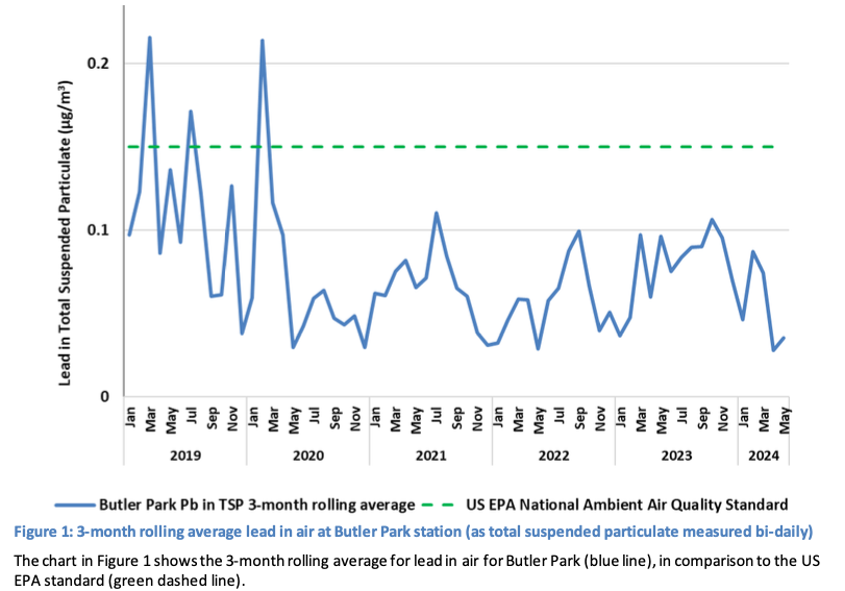
At this time, Federal and BC Provincial governments do not have ambient air quality objectives or standards for Pb; however, it is reasonable to rely on standards from other jurisdictions when this is the case. The green dashed line in Figure 1 indicates 0.15 μg/m3 on a 3-month average (US EPA standard). The Butler Park monitoring station has met the US EPA standard since 2020.
Summary reports are provided at the bi-monthly public Trail Area Health & Environment Committee (THEC) meetings. Meeting minutes include the air quality reports and are available online.
There is no known safe level of Pb exposure. The Trail Area Health & Environment Committee (THEC) has a goal of continuous reduction of Pb in the community and the partners focus on efforts to achieve this.
Young children are at highest risk of lead (Pb) exposure and its effects because:
- They often put their hands and objects in their mouths.
- They sometimes swallow non-food items.
- Their bodies absorb lead at a higher rate.
- Their brains are developing quickly.
Pregnant women exposed to lead can pass it to the baby. Lead can also be passed to a baby through the mother’s breast milk.
In addition to lead (Pb) contributions from historical use of products such as lead-based paint and leaded gasoline, Trail is home to one of the world’s largest Pb and zinc smelting and refining facilities, in operation for over one hundred years. Dust particles present in smelter emissions contain Pb. During operations, these particles can settle on surfaces in the Trail area as part of the dust and soil.
The amount of Pb currently contained in Teck’s stack emissions is low. Although fugitive dust emissions (see additional FAQ for definition) have also been significantly reduced, the main focus for further lowering lead levels in the Trail area remains on these fugitive dust emissions from onsite materials handling and vehicle traffic.
Continuous improvement is a key component of Teck Trail Operations Environmental Management System (ISO14001). Measurements of Pb in airborne dust help to understand levels of Pb in the community and inform environmental improvements.
Lead (Pb) is a naturally occurring element found in small amounts in the earth’s crust. You can find lead in various products such as vehicle batteries, radiation protection and soundproofing.
Air Quality Program SO2 (sulphur dioxide)
Air quality is managed to protect the environment and human health relative to BC’s Air Quality Objectives (AQOs) and the Canadian Ambient Air Quality Standards (CAAQS). For SO2, BC AQO are the same as the CAAQS; more information about these standards can be found at: https://www2.gov.bc.ca/assets/gov/environment/air-land-water/air/reports-pub/fs_so2_caaqs.pdf
BC uses these benchmarks to guide regulatory decisions, including permitting of discharges to air, to assess air quality, issue public advisories, aid regulatory development and support long-term air management strategies.
Teck Trail Operations operates under permits established by the BC Ministry of Environment and Parks (ENV).
In addition to reducing emissions, near real-time data is transmitted to Teck Trail Operations’ process control systems. If SO2 levels begin to rise (such as during a temperature inversion or during periods of higher emissions), plants at Teck Trail Operations are automatically notified so that actions can be taken to further reduce SO2 at the source and in the community.
The Ministry of Environment and Climate Change and Teck Trail have the ultimate goal of achievement of the Provincial and Federal benchmarks.
Over the past 30 years, over $1.7 billion has been invested in a modernization program to improve the operational and environmental performance at Teck Trail Operations resulting in significant improvements in community air quality.
Teck Trail Operations currently captures more than 99% of the sulphur contained in feed and meets the highest standard for sulphur capture for base metal smelters across Canada.
Teck Trail Operations has made a 25% reduction in emissions in the last ten years, accomplished through the installation of two new state of the art Acid Plants and operational changes. Teck Trail Operations continues to drive improvements and is currently advancing capital projects to achieve further reductions by 2023.
In addition to SO2 emissions reduction initiatives, Teck Trail Operations uses near real-time data to manage SO2 .
SO2 is monitored by Teck at four locations throughout Trail and the surrounding areas – Birchbank, Butler Park, Columbia Gardens and Warfield. These stations operate continuously, with near real-time data publicly available. SO2 levels fluctuate throughout the day, month and year. Find current and historical levels online at: http://www.env.gov.bc.ca/epd/bcairquality/readings/find-stations-map-SO2.html
Actual ambient SO2 concentrations in Trail fluctuate throughout the day, month and year.
This chart calculates the total hours of SO2 measured in community air (by monitoring station) in 2023. For actions to take at different levels, see docs 7.
| Station | SO2 Levels ppb | Hours / year* | % Time * |
|---|---|---|---|
| Birchbank Golf Course | 0-35 | 8345 | 99.4 |
| 36-184 | 50 | 0.6 | |
| 185+ | 0 | 0 | |
| Trail Butler Park | 0-35 | 8288 | 98.7 |
| 36-184 | 107 | 1.3 | |
| 185+ | 0 | 0 | |
| Trail Columbia Gardens Airport | 0-35 | 8376 | 99.8 |
| 36-184 | 19 | 0.2 | |
| 185+ | 0 | 0 | |
| Haley Park | 0-35 | 8126 | 96.8 |
| 36-184 | 265 | 3.2 | |
| 185+ | 4 | 0 |
**In 2023, all hours that measured above 185 ppb occurred between 8am-11am.
Although levels fluctuate, monitoring data from recent years exceed the benchmarks for ambient air quality set by the Provincial and Federal governments that came into effect in 2020.
Find current and historical data online at: http://www.env.gov.bc.ca/epd/bcairquality/readings/find-stations-map-SO2.html
When SO2 concentrations are elevated, consider reducing or rescheduling activities outdoors, remaining indoors, and reducing indoor sources of SO2 including tobacco smoke and unvented gas stoves. Persons with asthma should follow a management plan developed with their health care provider. If you are having trouble breathing, have chest pain or discomfort, or a severe cough, contact your health care provider or emergency department. See HealthLinkBC for a summary of health recommendations.
The SO2 levels and health guidance in the table below are based on Health Canada’s 2016 Human Health Risk Assessment for Sulphur Dioxide. For more information on the levels experienced in Trail, see docs 8.
| SO2 Levels | Consider taking the following action at these levels of SO2 |
| 0-35 ppb | None |
| 36-184 ppb | Persons with chronic respiratory conditions such as asthma should consider reducing or rescheduling strenuous outdoor activities if experiencing symptoms. No effects are expected for the general population. |
| 185+ ppb | Persons with chronic respiratory conditions such as asthma should reduce or reschedule strenuous activities outdoors. Others, especially children and the elderly should also consider avoiding outdoor physical exertion. |
Workers in industrial facilities where SO2 is used or is a by-product of industrial processes have the greatest exposure. People who live near these industries and other point sources can also be exposed to higher levels of SO2. See docs 7 and 8 for more information on SO2 levels.
Some people, particularly those with respiratory conditions, may be more sensitive to SO2 exposure. Sensitivities may result in symptoms such as irritation of the eyes and respiratory symptoms such as coughing, wheezing and shortness of breath.
Long-term exposure to the particles produced by the reaction of SO2 with other compounds in the air may also affect your health. These particles penetrate deeply into the lungs. This can cause irritation and inflammation that can damage the lining of the lungs and affect other parts of the body. Particles can worsen existing heart and respiratory disease, including emphysema and bronchitis. Because of this, children who live in areas with elevated sulphur dioxide concentrations may develop more breathing problems as they get older.
Short-term exposures to elevated SO2 levels can cause the air passages in the lungs to constrict or tighten, leading to breathing difficulties and tightening in the chest. Symptoms may include constriction or tightening of the airways in the lungs, coughing, wheezing and shortness of breath. It may also irritate the nasal passage, throat and eyes. Those most sensitive to the effects of SO2 include persons with chronic respiratory disease, especially persons with asthma. Symptoms may worsen during vigorous exercise or hard physical labour. See docs 7 and 8 for more information on SO2 levels.
SO2 is emitted by Teck Trail Operations as a by-product of processing mine concentrates, which contain sulphur, into metal and chemical products. With environmental improvements, SO2 emissions continue to decline. Teck Trail Operations currently captures more than 99% of the sulphur and converts it to by-products, such as fertilizer and sulphuric acid. About 1% leaves the operation through emissions to air. Sulphur capture at Teck Trail Operations is similar to what you might find at a brand-new smelter. However, the dispersion of air emissions from the smelter is constrained due to the location of the smelter, weather and the surrounding topography. SO2 levels in Trail are not static and fluctuate throughout the day, month and year. See docs 7 and 8 for more information on SO2 levels.
Sulphur dioxide (SO2) is a colourless, reactive gas. At higher concentrations it can have a strong odour. It is produced during the combustion of sulphur-containing fuels and industrial operations involving sulphur-containing materials. Major sources of SO2 in BC include the upstream oil and gas industry, metal smelting facilities, pulp / paper mills and marine operations (in the Lower Mainland area). Once released, one possibility is that SO2 can react with other compounds in the air to form fine particulate matter (small solid or liquid particles suspended in air).